

When we started building Widgetkraft, one question kept coming up in our minds. How do you actually know if a product has market fit? This is what we found out.
1.The Question We Kept Asking
When we started building Widgetkraft, one question kept coming up in our minds.
How do you actually know if a product has market fit?
- Is it when people say the idea sounds good?
- Is it when someone signs up for a waitlist?
- Or only when people actually start using the product?
At the beginning everything feels exciting. It was almost like a honeymoon phase for us. In our heads we were thinking this is going to be a great product once it launches.
But we also knew something important. This was not our first time building something.
2.The First Attempt at Getting Feedback
One day I randomly decided to post about the idea in a few Facebook groups.
The goal was simple. Get feedback. Understand if people even care about the problem.
We created a small Google form and shared it across groups and with some friends and trusted people. Honestly we expected at least some discussion.
But reality was very different.
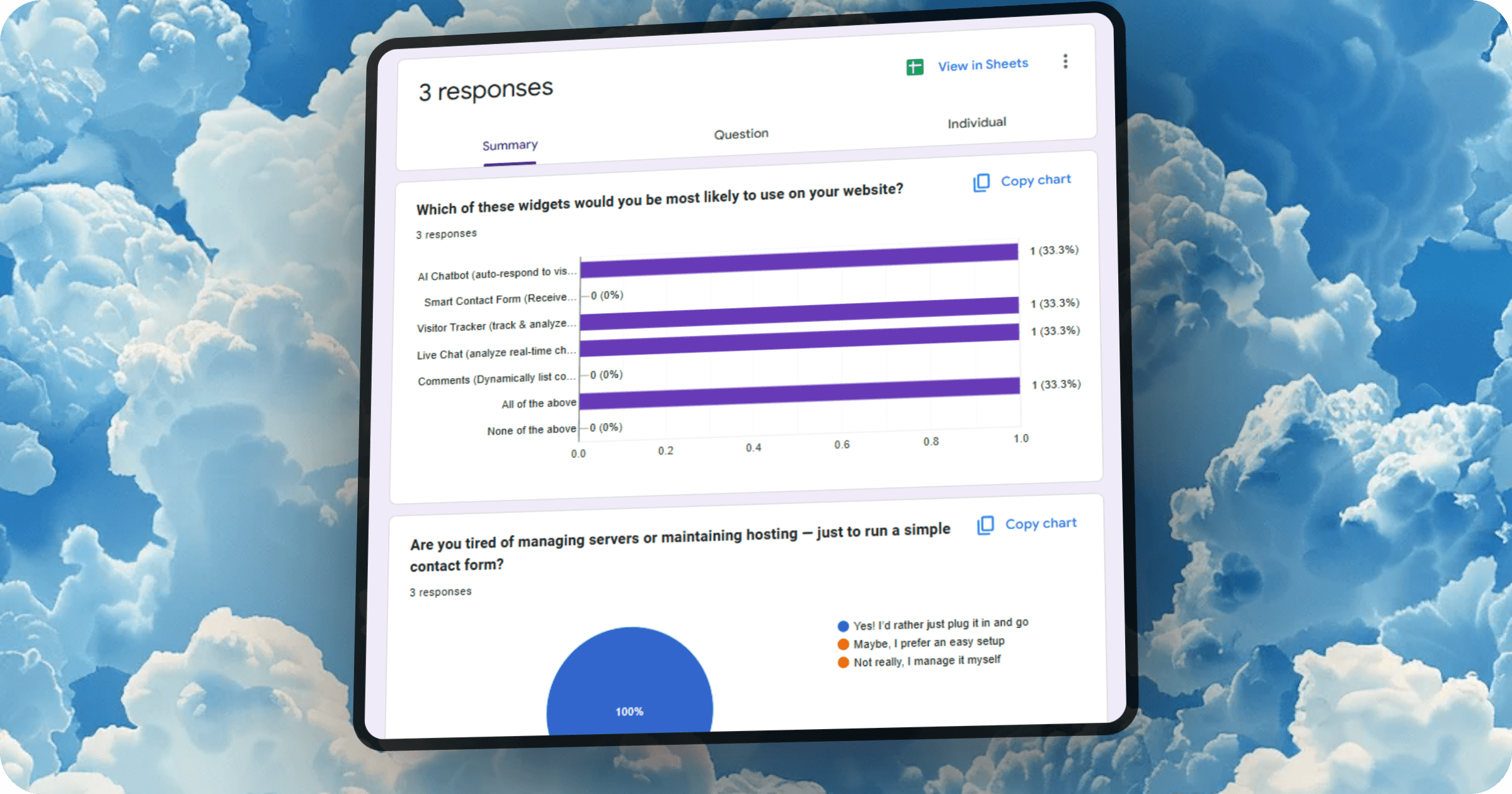
That moment really made us question the idea. Maybe the problem was not interesting enough. Maybe nobody actually needed something like Widgetkraft.
3.When We Tried a Different Approach
There is an old saying in Hindi.
Agar ghee seedhi ungli se na nikle to ungli thedi karni padti hai. If something does not work the straightforward way, you need to try a smarter approach.
So instead of just sharing a form, we started doing something different.
We began talking directly about the problem.
- Asked people how they currently manage engagement on their websites
- Asked what tools they were using
- Asked what was frustrating about their current setup

And suddenly people started responding. Not just filling forms, but actually sharing their experiences.
4.The Problem We Kept Hearing Again and Again
One thing came up repeatedly.
Most people were juggling multiple tools just to manage their website engagement.
Many of them were freelancers or small agencies handling 10 to 15 clients at a time. Managing all those tools for multiple projects was becoming messy and time consuming.
That is when we shared the idea behind Widgetkraft. A unified operating layer for web engagement. Instead of switching between several tools, everything could be managed from one place.
5.From Conversations to a Waitlist
Once we started sharing the idea more openly, people began joining our waitlist.
That was the first real signal that maybe we were building something useful.
But waitlists can be misleading.
Signing up for a waitlist is easy. Actually using the product after launch is the real test.
6.The Moment That Gave Us Confidence
We launched Widgetkraft in the last week of December. By the end of January 2026 we had more than 30 signups on the platform.
That number might not sound huge, but something more important happened.
- People did not just sign up
- They installed the widgets
- They deployed them on their websites
- They tested the features
- And most importantly, they gave feedback

That was the moment we felt something important.
Maybe Widgetkraft was not just an idea that sounded good. Maybe it was solving a real problem.
And that gave us the confidence to double down and keep building.
Stop juggling tools. Start understanding your users.
Product market fit is not always a big moment. Sometimes it is just a small signal that people care enough to try what you built.
Widgetkraft brings chat, contact forms, feedback collection, and engagement monitoring into one place so you spend less time managing tools and more time listening to the people using your product.
If you are building something and want to understand whether it is solving a real problem, start by making it easy for people to tell you.